ACH Networks as Strategic Options for Subscription Renewals and Merchant Fraud Mitigation
Written by Greta Long · Aug 22, 2026
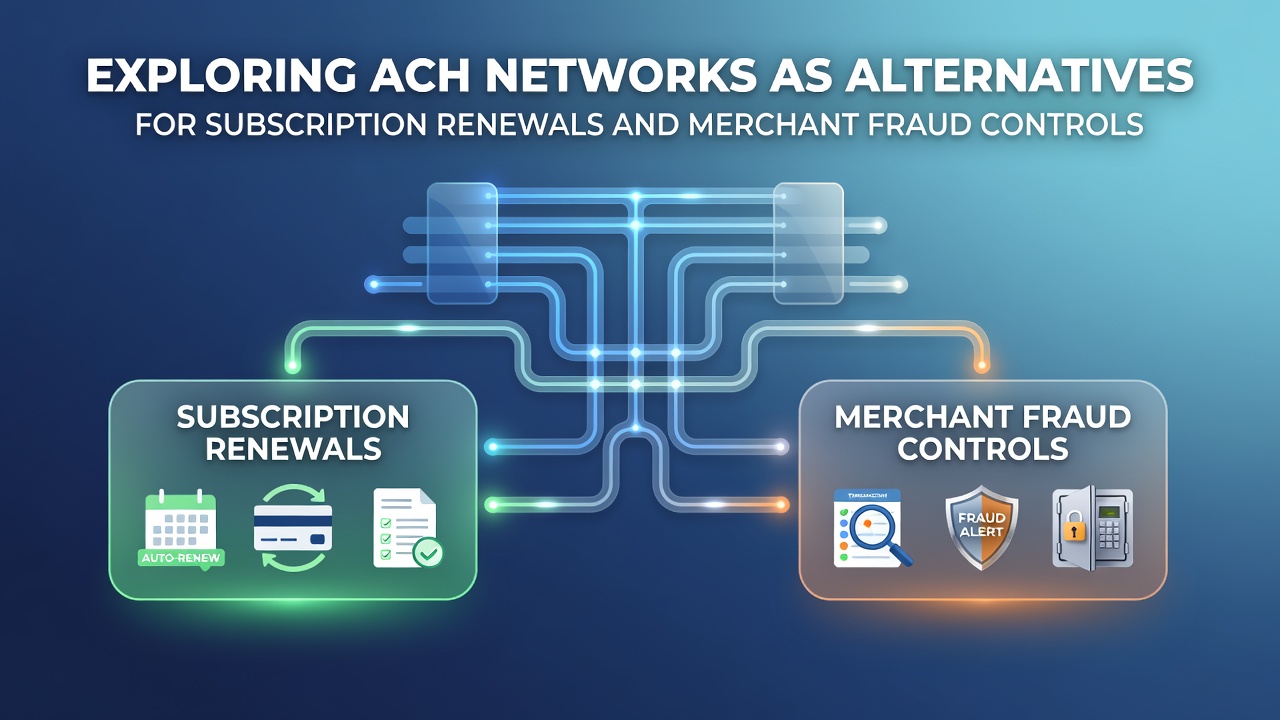
ACH Networks as Strategic Options for Subscription Renewals and Merchant Fraud Mitigation
ACH networks handle electronic funds transfers between bank accounts across the United States through the Automated Clearing House system operated under NACHA rules, and these networks present established pathways for handling subscription renewals while supporting merchant efforts to reduce fraud exposure. Merchants process recurring payments through direct debits that pull funds from customer accounts on scheduled dates after obtaining proper authorization, and this approach bypasses card networks entirely for many routine billing cycles.
Data from payment industry reports shows ACH transaction volumes continue to rise each year, with recurring payments forming a significant portion of the total activity. Settlement occurs in batches rather than real time, which means funds typically reach the merchant account within one to two business days, although same-day ACH options have expanded availability since their introduction. Observers note that the lower per-transaction costs compared to credit card processing make ACH attractive for businesses managing high volumes of renewals, particularly in sectors such as utilities, insurance, and software-as-a-service platforms.
Mechanics of ACH for Recurring Subscription Payments
Merchants initiate ACH debits after customers provide bank routing and account details along with authorization forms that comply with NACHA operating rules, and these authorizations can be collected through signed documents, web forms, or recorded telephone calls. Once set up, the system automatically generates transactions on renewal dates without requiring customers to re-enter payment information each cycle. Returns for insufficient funds or unauthorized entries follow specific timeframes, with most unauthorized debits eligible for reversal within 60 days under Regulation E protections for consumers.
Those who have implemented ACH for subscriptions often discover that success rates for completed payments exceed card-based renewals in many cases because bank accounts rarely expire or get replaced like credit cards do. Yet processing requires careful management of prenotification entries to verify account details before the first debit, and businesses must maintain records of authorizations to handle disputes efficiently when they arise.
Fraud Control Features Within ACH Frameworks
ACH networks incorporate several built-in mechanisms that merchants use to limit exposure, including account validation services that confirm routing numbers and ownership before processing large or recurring amounts. Positive pay services allow businesses to review and approve outgoing or incoming transactions against pre-approved lists, while daily velocity limits and dollar thresholds help contain potential losses from compromised authorizations. Researchers from financial institutions have documented how these controls reduce unauthorized activity compared to card-not-present environments where stolen credentials circulate more readily on underground markets.
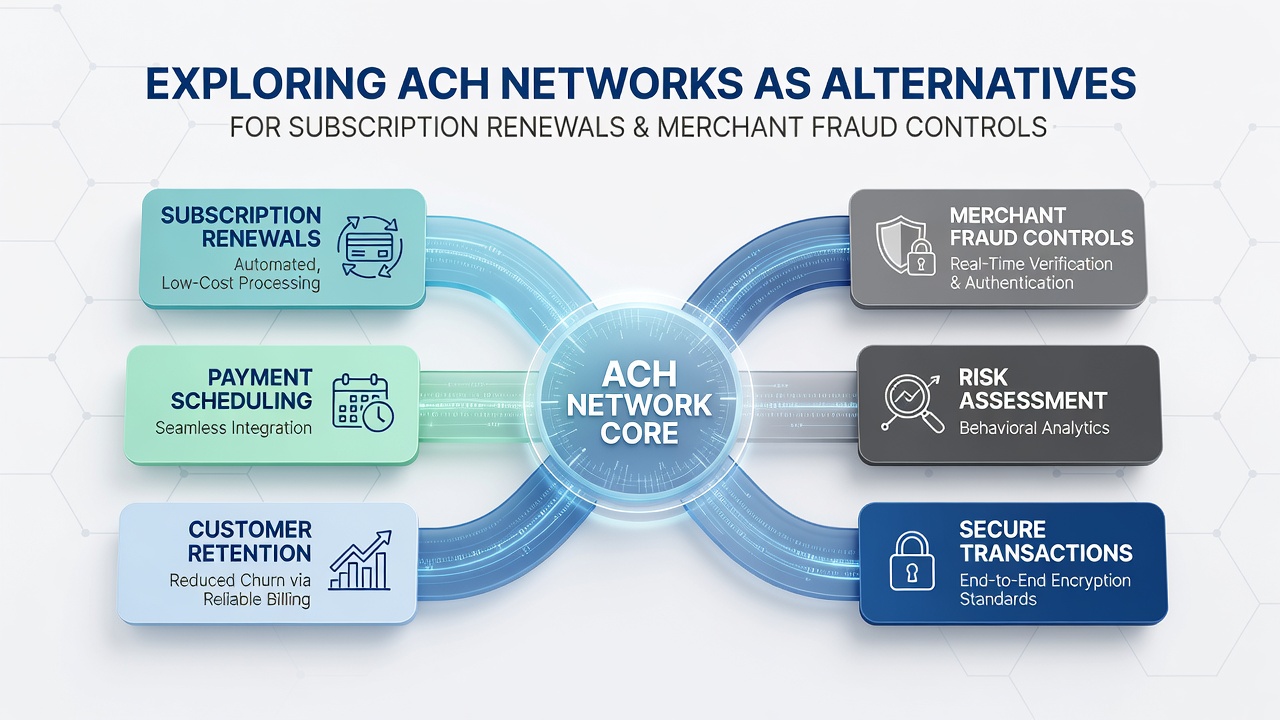
What's interesting is that ACH fraud patterns differ from card fraud because reversals depend on return codes rather than chargeback processes, giving merchants clearer visibility into dispute reasons. As of August 2026, updated NACHA rules have strengthened requirements around multi-factor authentication for certain high-risk originators, and compliance with these standards has become a baseline expectation for any organization handling significant subscription volume. Government sources such as the Federal Reserve Bank of New York publish periodic analyses of payment system risks that highlight ACH's relatively stable fraud rates when proper onboarding and monitoring procedures remain in place.
Comparative Considerations Against Card-Based Renewals
Card networks offer immediate authorization responses and widespread consumer familiarity, whereas ACH transactions settle more slowly and lack the rewards structures that encourage card usage. Still, data indicates ACH fees often range from a few cents per transaction plus a small percentage, creating meaningful savings at scale, and the reduced incidence of certain fraud types offsets some operational overhead. Merchants who combine both methods report segmenting customers by preference, routing stable recurring relationships through ACH while directing one-time or high-value purchases to cards.
European counterparts have developed parallel systems such as SEPA Direct Debit that mirror many ACH functions for cross-border recurring payments, and Canadian payment frameworks through Payments Canada provide similar batch processing capabilities. These regional variations demonstrate how batch electronic debit networks serve comparable roles worldwide even when technical specifications differ.
Implementation Patterns Observed Across Industries
Subscription businesses in the fitness, media streaming, and telecommunications sectors have integrated ACH options alongside card payments to capture customers who prefer direct bank withdrawals, and case examples show conversion improvements when ACH appears as a checkout choice. Implementation typically involves working with an originating depository financial institution that sponsors the merchant into the ACH network, followed by software integration for authorization capture and transaction submission. Ongoing monitoring includes review of return rates by reason code, with sustained high unauthorized return percentages triggering review by the originating bank.
Academic studies on payment choice have examined how perceived security influences consumer selection between ACH and cards, revealing that trust in bank-level protections often drives adoption of direct debit methods. Organizations that educate customers about the reversal rights available under consumer protection rules tend to see higher uptake rates for ACH enrollment during signup flows.
Conclusion
ACH networks continue to function as practical alternatives for subscription renewals while supplying merchants with targeted tools for managing fraud risk through authorization requirements, return mechanisms, and monitoring protocols. Adoption patterns reflect ongoing shifts toward diversified payment acceptance that balances cost, reliability, and consumer protection across different transaction types. Those managing recurring billing operations benefit from evaluating ACH alongside other methods to align processing channels with specific business needs and risk tolerances.