Credit Card Swipes in Merchant Setups: Managing One-Time Invoice Transactions
Written by Eden Walter · Oct 14, 2026
Credit Card Swipes in Merchant Setups: Managing One-Time Invoice Transactions
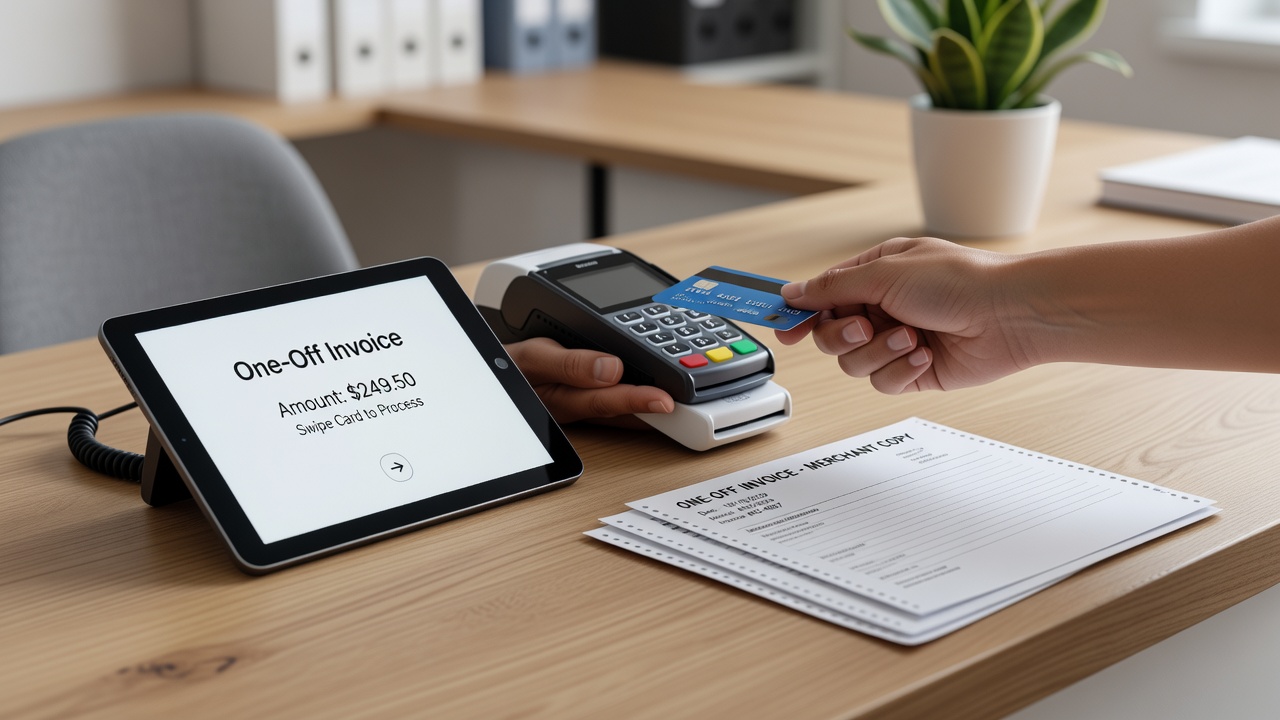
Merchants handling one-off invoices often rely on card-present credit card swipes to complete payments at the point of service, and this approach requires precise setup within existing merchant account frameworks to maintain transaction integrity. Data from payment networks shows that card swipes account for a significant portion of non-recurring sales in retail and service environments, where customers present physical cards rather than entering details online. Observers note that proper terminal configuration helps reduce errors during authorization requests sent to processors, while compliance with standards such as those outlined by the PCI Security Standards Council ensures data protection across each isolated transaction.
Terminal Configuration Basics for Isolated Payments
Setup begins with selecting hardware that supports magnetic stripe, EMV chip, and contactless readers, since one-off invoices frequently involve in-person interactions at counters or service locations. Researchers at industry organizations have documented that terminals must connect to merchant accounts configured specifically for card-present processing, which differs from card-not-present gateways used in recurring billing. And because each invoice stands alone, systems avoid storing cardholder data after authorization, which aligns with requirements that limit retention to the minimum necessary for settlement.
Configuration steps include entering merchant ID details into the terminal software, selecting transaction types limited to single authorizations, and testing connectivity to the acquiring bank before live use. Those who manage merchant accounts often integrate these terminals with inventory or accounting platforms so that invoice amounts transfer directly to the payment request, reducing manual entry that could introduce discrepancies. What's interesting is how firmware updates scheduled for October 2026 will introduce enhanced encryption protocols on many devices, prompting merchants to verify compatibility ahead of deployment.
Authorization Flow and Settlement Mechanics
When a customer presents a card for an invoice, the swipe or dip initiates an authorization request that travels from the terminal through the payment processor to the card-issuing bank, and approval arrives within seconds for most legitimate transactions. Figures from payment processors reveal that authorization rates for card-present one-off payments exceed those for remote entries, largely because verification includes signature or PIN elements plus real-time card verification. Settlement then occurs in batches at the end of the business day, moving funds from the issuer to the merchant account minus applicable interchange fees.
Merchants must monitor response codes that indicate declines, such as insufficient funds or suspected fraud, and handle them by requesting alternative payment methods without retrying the same card immediately. External link integration appears in some setups where terminals connect to services like those provided by PCI Security Standards Council guidelines for ongoing compliance checks, helping businesses stay aligned with data security rules that evolve periodically.
Compliance Requirements and Risk Controls
Regulatory frameworks in multiple regions require merchants to maintain separate processes for one-off versus recurring transactions, and evidence from oversight bodies indicates that mixing the two can trigger additional scrutiny during audits. In the United States, Federal Trade Commission resources outline consumer protection measures that apply when cards are used for single payments, while similar directives from the European Central Bank address cross-border invoice handling in the EU. Canadian authorities through the Financial Consumer Agency of Canada provide parallel guidance on disclosure practices for merchants accepting card swipes on ad-hoc invoices.
Training staff to recognize skimming devices and to verify card presence during each transaction forms another layer of protection, since one-off setups lack the ongoing monitoring available in subscription models. Data indicates that implementing end-to-end encryption at the terminal level cuts breach risks substantially, and many acquiring banks now mandate these features for new merchant accounts. Observers note that regular reconciliation between processed invoices and bank deposits helps identify discrepancies early, allowing quick resolution before chargeback windows close.
Integration with Existing Merchant Systems
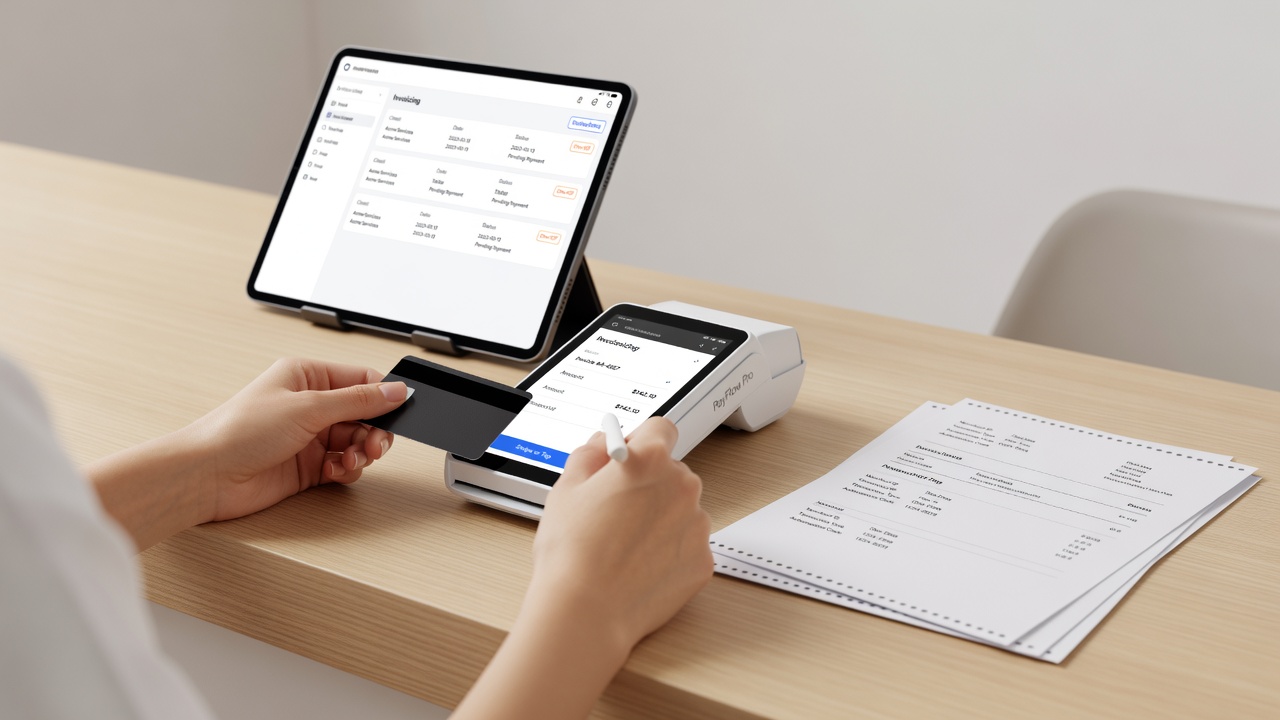
Connecting swipe terminals to broader merchant platforms requires API or middleware solutions that map invoice fields to payment fields without creating stored credentials, and this keeps each transaction isolated as intended. Studies from trade groups show that businesses using unified dashboards for inventory, invoicing, and payments report fewer reconciliation issues compared with disconnected systems. Yet integration testing remains essential because mismatched data formats can cause authorization failures even when card details are valid.
Some merchants add receipt customization features so that printed or emailed confirmations include only the required transaction details, satisfying both customer needs and record-keeping rules. And because October 2026 brings updated terminal certification standards in several markets, forward planning around hardware refreshes helps avoid service interruptions during transition periods.
Conclusion
Navigating credit card swipes for one-off invoice handling centers on accurate terminal configuration, strict adherence to authorization and settlement protocols, and ongoing compliance with security standards across regions. Research indicates that merchants who align hardware, software, and staff procedures around these isolated transactions achieve higher approval rates and lower operational friction. As payment networks continue to refine requirements ahead of October 2026 updates, attention to these elements supports reliable processing without overlap into recurring payment structures.