Integrating Legacy Bank Systems With Current Credit Card Solutions for Automated Merchant Settlements
Written by Greta Long · Oct 28, 2026

Integrating Legacy Bank Systems With Current Credit Card Solutions for Automated Merchant Settlements
Legacy banking systems continue to handle core transaction ledgers at many financial institutions, while credit card networks have evolved to support real-time authorization and batch settlement processes that reduce manual reconciliation steps. Observers note that connecting these two environments requires middleware layers capable of translating older message formats such as ISO 8583 into API calls accepted by contemporary card processors. Research from payment infrastructure studies indicates that automated settlement cycles shorten when card transaction data flows directly into legacy general ledger entries without separate file transfers.
Core Components of Legacy Banking Environments
Many established banks maintain mainframe systems that record deposits, withdrawals, and account balances using batch-oriented processing schedules, and these platforms often operate on nightly cycles that align with older regulatory reporting requirements. Data shows that such architectures still manage the majority of account balances in certain regions because they deliver proven reliability for high-volume, low-variability transactions. Experts point out that credit card settlement instructions must therefore arrive in formats the mainframes already recognize, which creates demand for translation services that preserve transaction integrity across both environments.
Features of Modern Credit Card Processing Tools
Contemporary card platforms provide tokenization, dynamic currency conversion, and instant fraud scoring that operate through RESTful endpoints rather than fixed file exchanges. Studies reveal that these tools support automated payouts to merchant accounts once authorization codes receive confirmation, and the resulting settlement files can be pushed to partner banks within hours instead of days. Observers note that integration points now include webhooks that notify legacy systems the moment funds move, allowing account updates to occur without waiting for end-of-day batch jobs.
Technical Approaches to System Bridging
Developers typically deploy API gateways that accept card network responses and convert them into structured messages the legacy core can ingest, and these gateways often include retry logic plus audit logging to satisfy compliance audits. According to Federal Reserve documentation on payment system modernization, standardized interfaces reduce settlement discrepancies by mapping each card transaction identifier to the corresponding bank account record. In parallel, some institutions use message queues that stage settlement instructions until the legacy batch window opens, ensuring that automated credits post without disrupting existing operational rhythms.
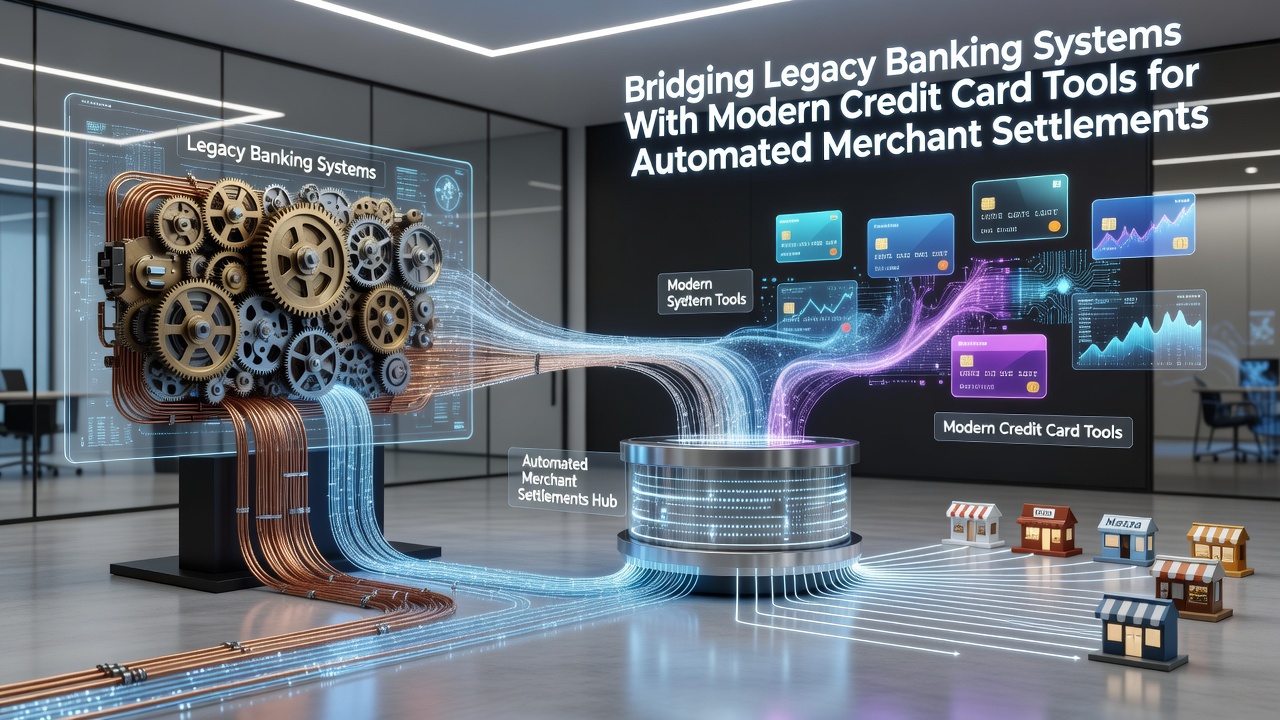
Encryption standards required by card networks must also align with legacy access controls, and organizations achieve this through hardware security modules that sit between the two layers. Research indicates that such configurations maintain PCI DSS compliance while permitting older applications to continue reading transaction totals in their native formats. Those who manage these bridges report that monitoring dashboards now track both card response times and legacy posting success rates within a single view.
Automated Settlement Workflows in Practice
Once a merchant transaction receives approval, the card processor generates a settlement record that travels through the gateway and triggers an internal funds transfer instruction inside the legacy system. Data from industry reports shows that this sequence completes in under four hours for many mid-sized merchants when all mappings are pre-configured. European Central Bank analyses of cross-border card payments note that similar automation has reduced the average time between authorization and final credit to the merchant account in several member states. The process also generates exception reports automatically when currency conversion or interchange fees deviate from expected ranges, allowing staff to review only flagged items rather than entire batches.
Developments Expected by October 2026
Payment standards bodies have scheduled updates to message specifications that will take effect in October 2026, and these changes require legacy systems to accept additional data fields for real-time settlement reporting. Institutions that have already built bridging layers report they can accommodate the new fields through configuration updates rather than code rewrites. Observers note that testing windows for these enhancements began in early 2025, giving banks and processors time to validate end-to-end flows before the deadline. Automated reconciliation tools are expected to incorporate the expanded data sets, further reducing manual adjustments during monthly close periods.
Conclusion
Bridging legacy banking systems with modern credit card tools enables automated merchant settlements by translating transaction data across differing technical environments and posting results according to established batch schedules. Evidence from regulatory and industry sources demonstrates that these connections shorten settlement cycles, maintain compliance requirements, and limit manual intervention to exception cases. As standards evolve through 2026, organizations that maintain flexible integration layers continue to support both existing ledgers and updated card network protocols without service interruption.